
Context · Portfolio · Capabilities · Choices
Understand the context before defining the strategy.
Tools are useful when they create a shared view of reality, reveal alternatives and lead to explicit choices.
Eight complementary steps
No single tool replaces judgement.
01
PESTEL
Understand macro-environmental forces and build scenarios.
02
Porter’s Five Forces
Assess competitive intensity and industry attractiveness.
03
BCG Matrix
Allocate investment across activities to grow, fund or transform.
04
Internal Analysis
Evaluate resources, capabilities, processes, culture and execution capacity.
05
SWOT
Combine strengths, weaknesses, opportunities and threats to shape options.
06
Ansoff Matrix
Choose a growth path across existing or new markets and products.
07
Strategic Plan
Prioritize choices and define responsibilities, resources and timing.
08
Balanced Scorecard
Translate strategy into objectives and indicators monitored through MARC.
PESTEL
Read the macro-environment before extrapolating the past.
Porter’s Five Forces
Understand competitive pressure and industry attractiveness.
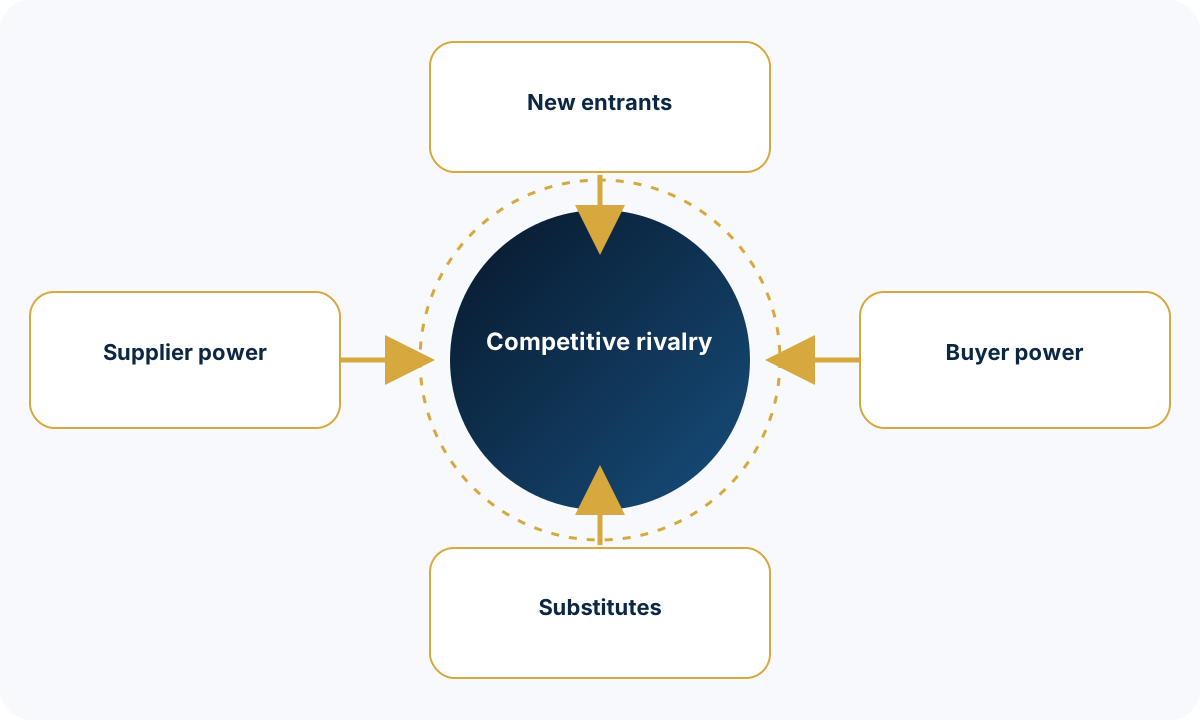
The framework complements PESTEL by focusing on rivalry, bargaining power, entry barriers and substitutes.
Competitive rivalry
Intensity, differentiation, innovation pace and price pressure.
Buyer power
Concentration, price sensitivity, transparency and switching costs.
Supplier power
Dependency, scarcity, alternatives and substitution costs.
New entrants
Capital, technology, market access, regulation and scale effects.
Substitutes
Alternative solutions, technologies, business models and behaviours.
BCG
StarsInvest and scale
Question marksChoose and test
Cash cowsProtect and fund
DogsTransform or exit
Market growthRelative positionSWOT
Strengths
Distinctive capabilities and assets.
Weaknesses
Internal limitations and vulnerabilities.
Opportunities
External spaces for value creation.
Threats
External forces that can reduce value.
Growth options
Ansoff Matrix — choose how to grow across products and markets.
The matrix distinguishes four growth paths depending on whether the company builds on existing products and markets or moves into new territory.
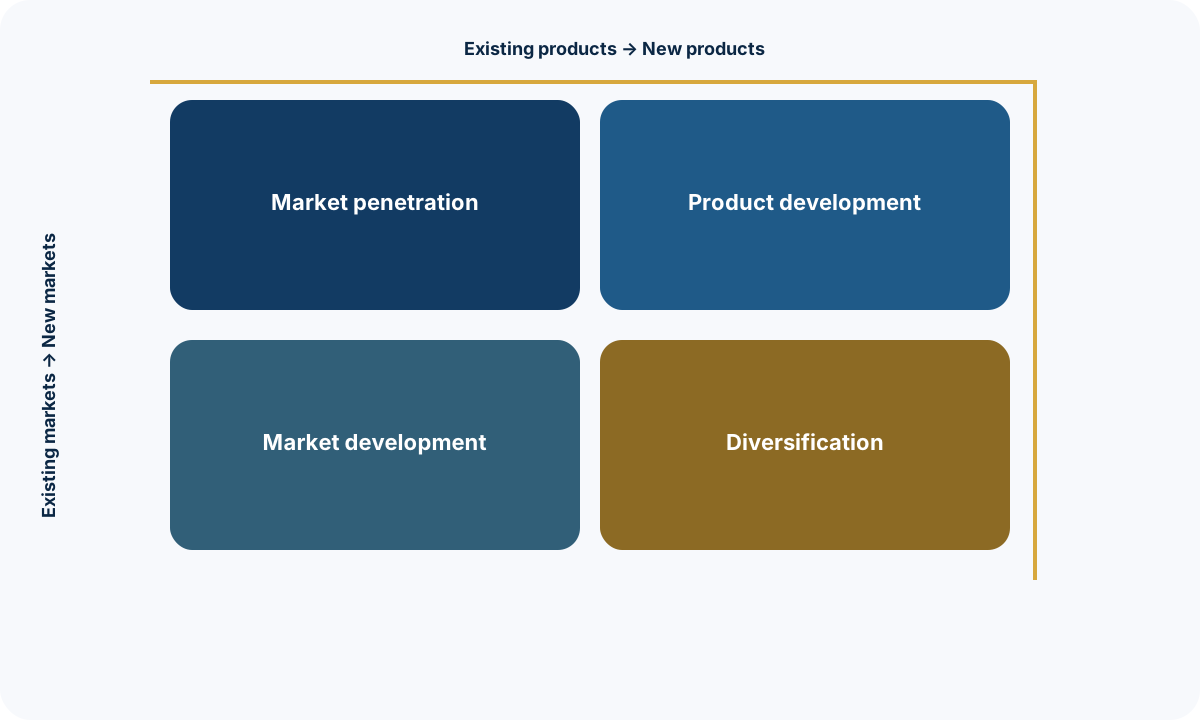
Market penetration
Grow existing offers in markets already served.
Product development
Bring new offers to existing customers and markets.
Market development
Take existing offers to new segments or geographies.
Diversification
Create new offers for new markets, with a higher risk profile.
Balanced Scorecard
Translate strategy into balanced objectives and indicators.
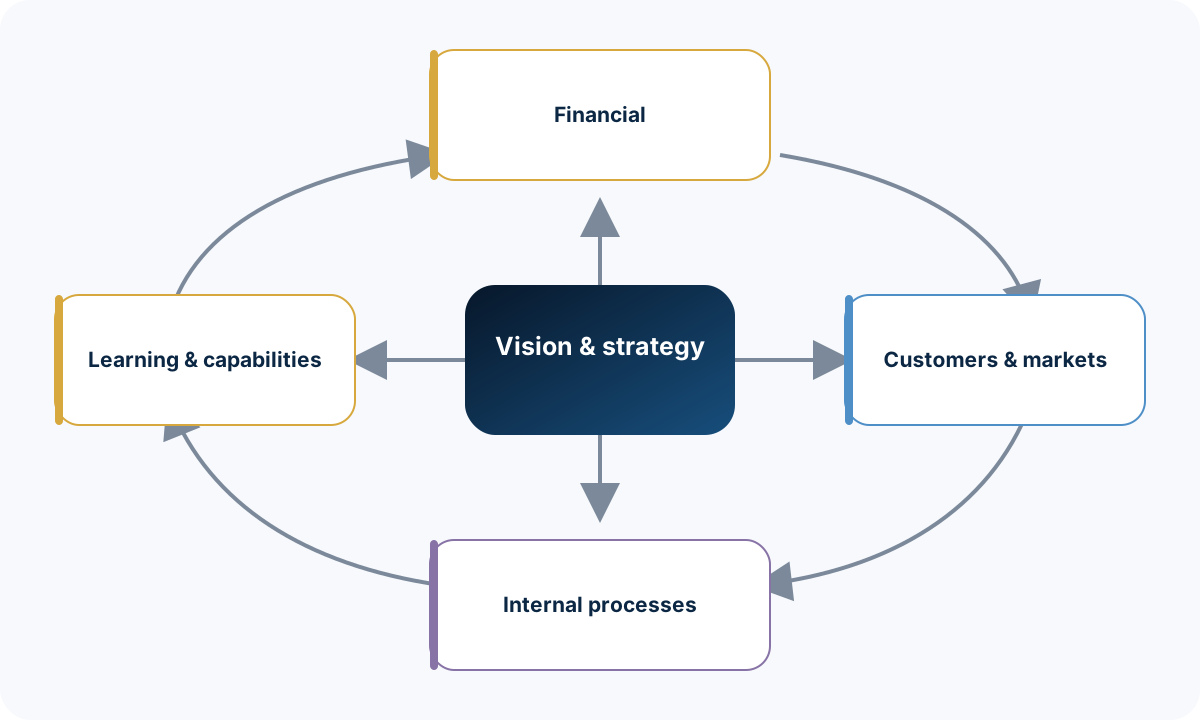
Financial, customer, process and learning measures define how progress will be observed. MARC then uses them to check direction, learn and adjust.
Financial
Profitability, growth, cash, productivity and value creation.
Customer & market
Satisfaction, retention, perceived value and market position.
Internal processes
Quality, lead time, innovation, risk and operational excellence.
Learning & growth
Skills, leadership, culture, data, systems and transformation capability.
Connection to MARCMeasure defines the baseline and KPIs. Analyze explains gaps. Realize turns insights into action. Control checks direction and feeds continuous improvement.
Integrated pathway
Move from observation to choice, then to execution.
PESTEL
Porter’s Five Forces
BCG portfolio
Internal assessment
SWOT synthesis
Ansoff growth options
Execution plan
Balanced Scorecard